
 Do
you have an inkjet printer? Would you like to help the IMHS? Click
here for more
information.
Do
you have an inkjet printer? Would you like to help the IMHS? Click
here for more
information.


Want to have some furry fun?
Try volunteering. You will meet new people, have fun helping animals, and make a difference in the community. Call or stop by and meet the friendly animals and staff.
IMHS Wildlife Rescue Program
Intermountain Humane Society, in cooperation with Lone Rock Veterinary Clinic has provided veterinary resources for area wildlife rehabilitators for many years. We also provide direct services in cooperation with Lone Rock for the treatment of wildlife cases brought to us by the public. All wildlife cases are handled with the utmost care to keep within the established Colorado Division of Wildlife policies on the treatment of wildlife cases. Wild animals are always either released, transferred when appropriate to a licensed wildlife rehabilitator, or is some cases provided with humane euthanasia. Wildlife cases cannot be returned to the finder or kept as pets.
Some examples of recent wildlife cases are as documented here:
 |
In August of 1999, a female elk calf was brought to our attention late one night after probably being hit by a car and further injured by rolling down a long steep embankment. She was transferred to the barn at Lone Rock with the assistance of DOW officer Russ Mason. The elk calf showed signs of spinal cord bruising, but was not completely paralyzed and did not seem in undue pain. Initial treatment resulted in a favorable response, but she was far from being ready to release. The cow was transported to Frisco Creek Wildlife Hospital near Del Norte, Colorado, approximately five hours away. At this facility, Dr. Herman Deitrich and his wife Susan cared for the elk, named by them "Conifer" for about several months. She recovered to nearly 100% and was successfully released in the Frisco Creek area in late November. |
|
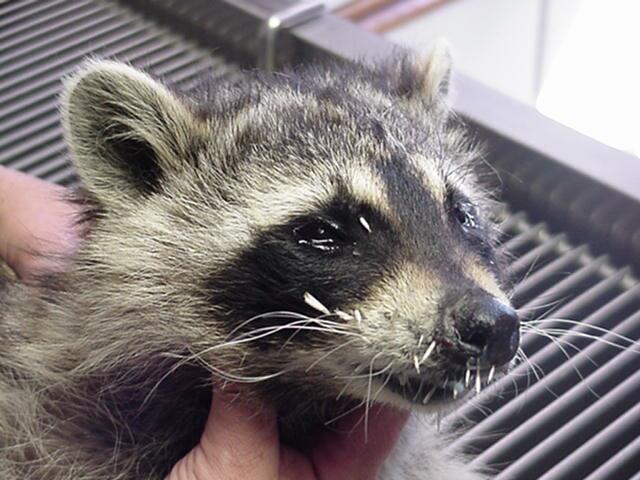
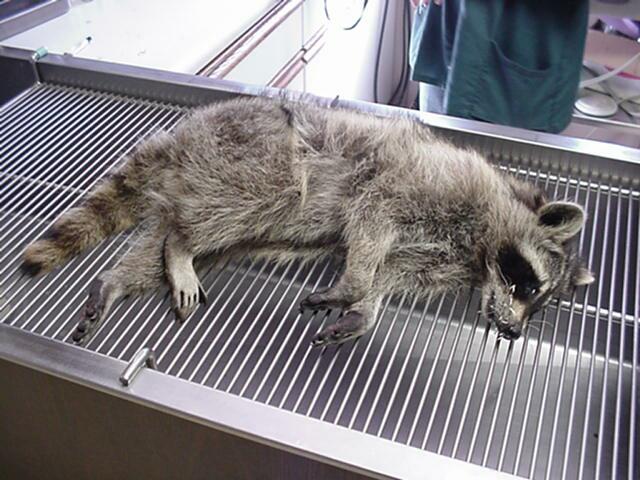
In May of 2001, we were presented with a raccoon with porcupine quills. The person who discovered the poor thing was able to capture it using a humane live trap and transport the young male raccoon to Lone Rock Veterinary Clinic, where he was anesthetized and treated. After removing the quills, we gave him some fluids to correct his dehydration and gave him antibiotics for the infection (since the quills had been in place for several days). He was returned to his original territory later the same day, feeling much better and able to eat. |
Each year we are presented with deer, raccoons, foxes, various birds and other species that have been hit by a car, attacked by dogs or otherwise injured or ill. Please exercise great care when traveling on the highway for your own safety as well as the safety of wildlife and stray pets. We also have several public health and safety issues to consider in our area, where we live in such close contact with wildlife:
|
If you find injured or ill wildlife, please contact the Colorado Division of Wildlife, IMHS, a local veterinary clinic or the county animal control authority. Be very careful not to approach any potentially dangerous wildlife yourself, but wait for help from the above resources. Rabies was recently seen in a fox from the Florence (Canon City) area, so rabies must be considered a possibility when a wild animal is not able to run away or doesn't seem afraid. |
|
We have recently have seen two cases of ill raccoons that probably had canine distemper virus in 2001. In past years, there have been several outbreaks of distemper in raccoons in the Metro area and Front Range Mountains. Please do not approach sick raccoons!! Call for help from the above resources. Canine Distemper virus can affect dogs, coyotes, raccoons, foxes and several other species, so keep your dogs immunized according to your veterinarian's recommendations. |
|
Raccoons can carry a species of intestinal worm called balis ascaris that can cause very serious health problems in people. This roundworm can sometimes reproduce in dogs as well. Microscopic larvae from this worm have been known to wind up in the brain of people and dogs, causing serious disease and even death. For this reason, we recommend that you not feed raccoons or otherwise encourage them to reside at your house. You should also work with your veterinarian to ensure that your dogs are on a routine parasite control program. |
|
Wild animals cannot be legally kept as pets in the state of Colorado by the general citizenry. Injured animals must be either returned to the wild within a reasonable length of time, placed into a licensed zoo or licensed educational organization or humanely destroyed. While this may seem harsh at times, wild animals are often very stressed out in captivity and can easily inflict injury on themselves or their human keepers. We ask that all area residents respect these laws. |